
Compressed Air & Automation

Industrial Pneumatics

Components and technical guidance for reliable compressed-air preparation, control, actuation and machine automation.

How a Pneumatic System Works

A pneumatic system converts compressed air into controlled motion or force. Reliable performance depends on more than selecting a cylinder or valve: supply pressure, available flow, air preparation, tubing size, control response, exhaust capacity and duty cycle all influence the result.

1. GenerateCompressor creates the compressed-air supply.
2. TreatDrying, filtration and condensate management protect equipment.
3. RegulatePressure is controlled to the level required by the machine.
4. ControlDirectional, flow and pressure valves manage air paths.
5. ActuateCylinders, rotary actuators or air tools perform the work.
Pneumatic Product Range

Featured Pneumatic Products

Select a product image to view its features and end-user benefits. Product codes are unique to the Joint Venture Pump Services catalogue. Click any blue product code or product image to open the full product details page.

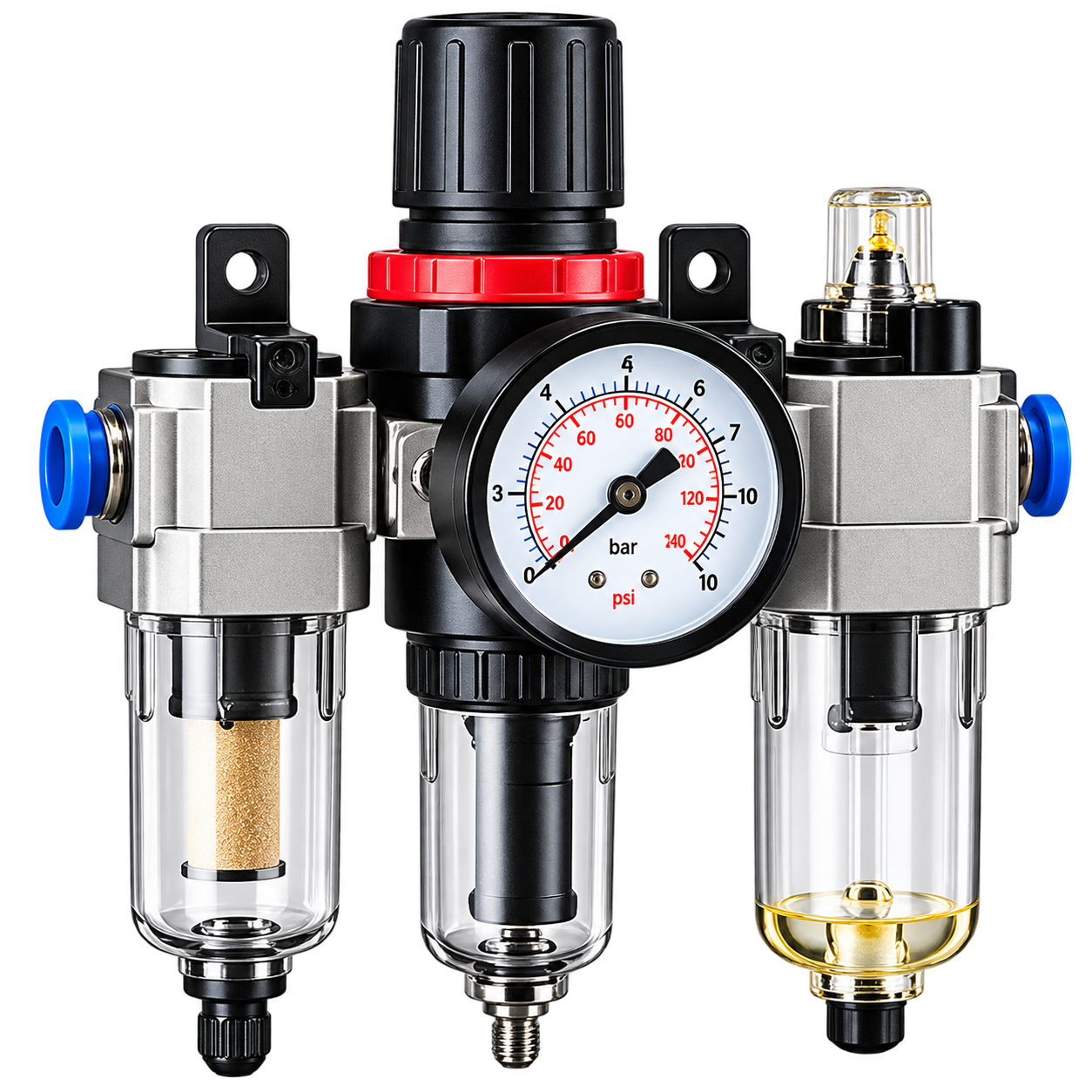
JVP-FRL-100 FRL air preparation unit
JVP-FRL-100

FRL Air Preparation Unit

Filter, regulator and lubricator assembly for point-of-use compressed-air treatment.

  • Features: visible pressure gauge, modular bowls, adjustable regulator and serviceable filter elements.
  • Benefits: cleaner air, stable pressure, reduced valve/seal wear and easier maintenance.
View product details →
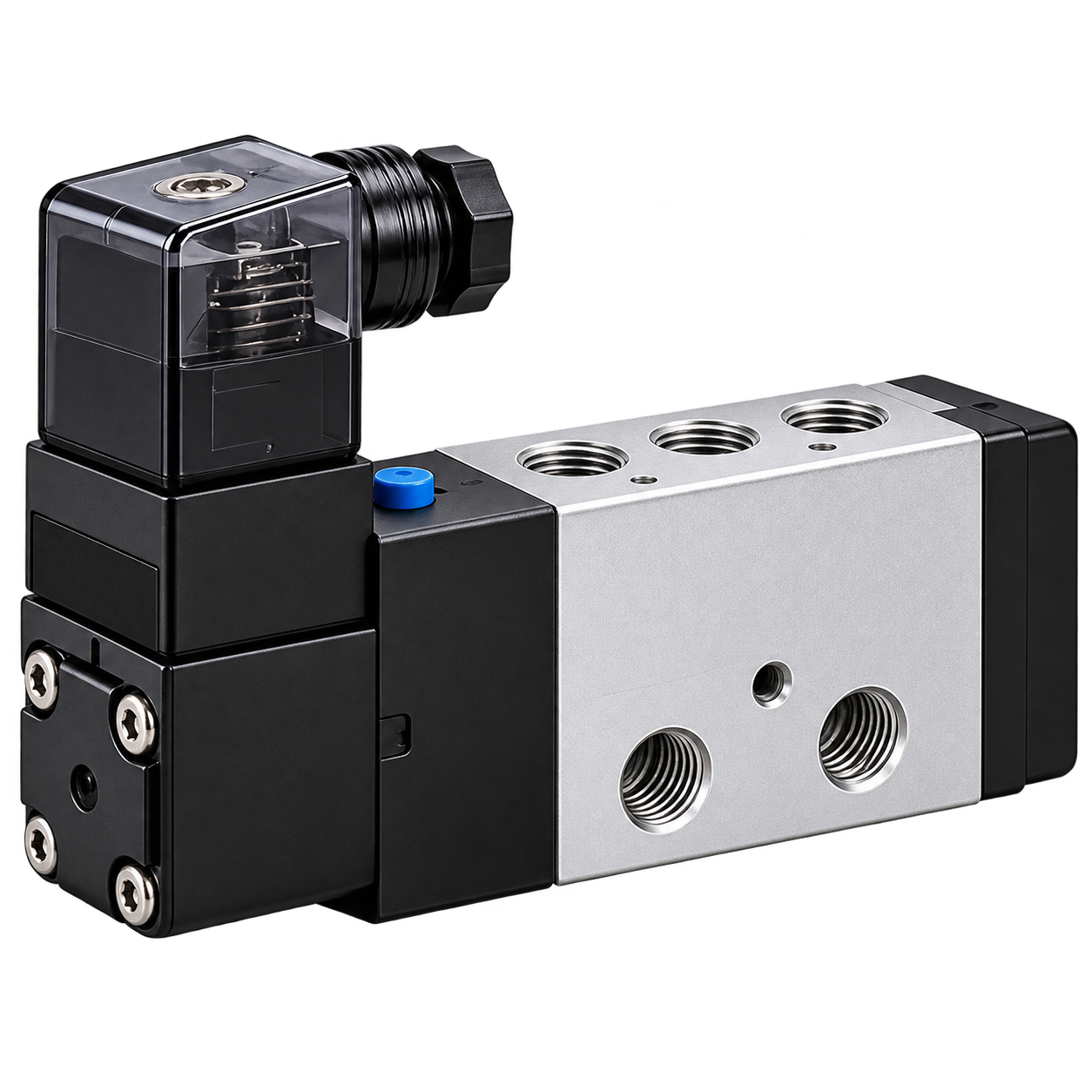
JVP-DCV-520 solenoid directional control valve
JVP-DCV-520

5/2 Solenoid Directional Valve

Electrically actuated valve for controlling double-acting pneumatic actuators.

  • Features: compact manifold-ready body, solenoid actuation, multiple port configuration.
  • Benefits: fast switching, reliable automation, reduced piping and simple machine integration.
View product details →
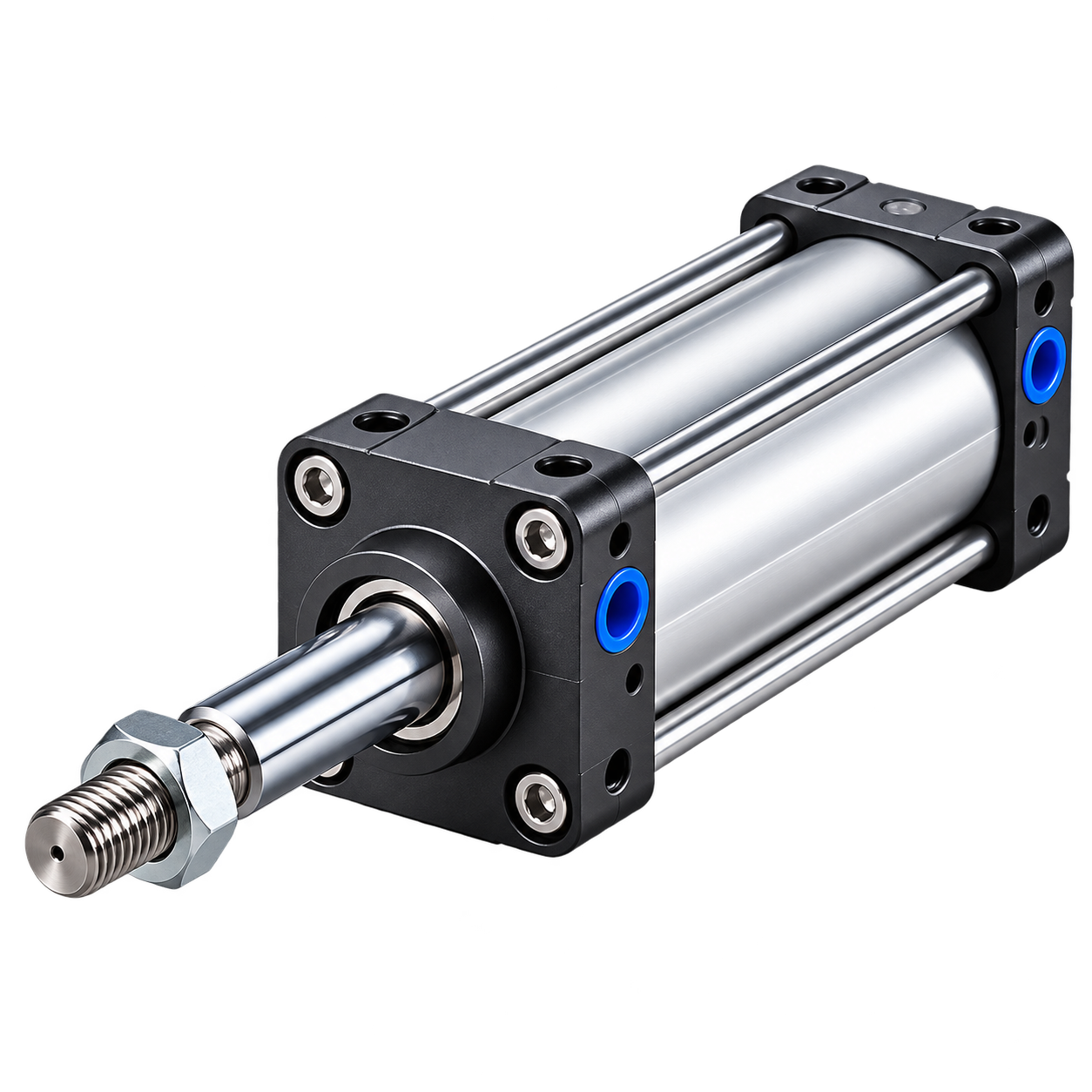
JVP-CYL-063 double acting pneumatic cylinder
JVP-CYL-063

Double-Acting Pneumatic Cylinder

Industrial linear actuator for repetitive push/pull motion.

  • Features: tie-rod construction, adjustable cushioning, threaded piston rod and standard mounting points.
  • Benefits: dependable linear motion, easy mounting, reduced impact at stroke ends and simple replacement.
View product details →
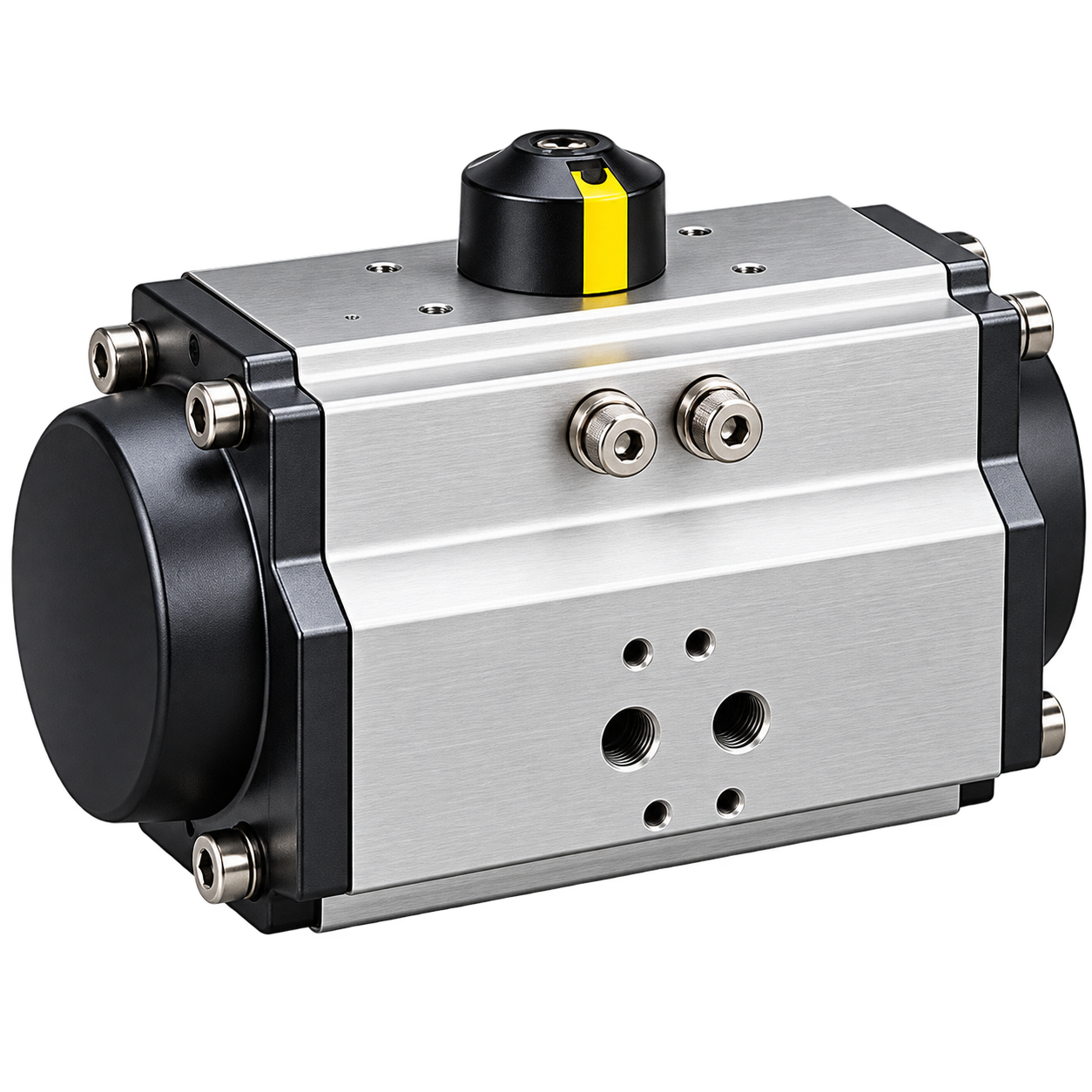
JVP-RA-090 rotary pneumatic actuator
JVP-RA-090

Quarter-Turn Rotary Actuator

Compact actuator for valve automation and controlled rotary movement.

  • Features: robust aluminium housing, dual air ports, adjustable travel stops and indicator-ready top interface.
  • Benefits: compact installation, repeatable 90° movement and efficient automation of process valves.
View product details →
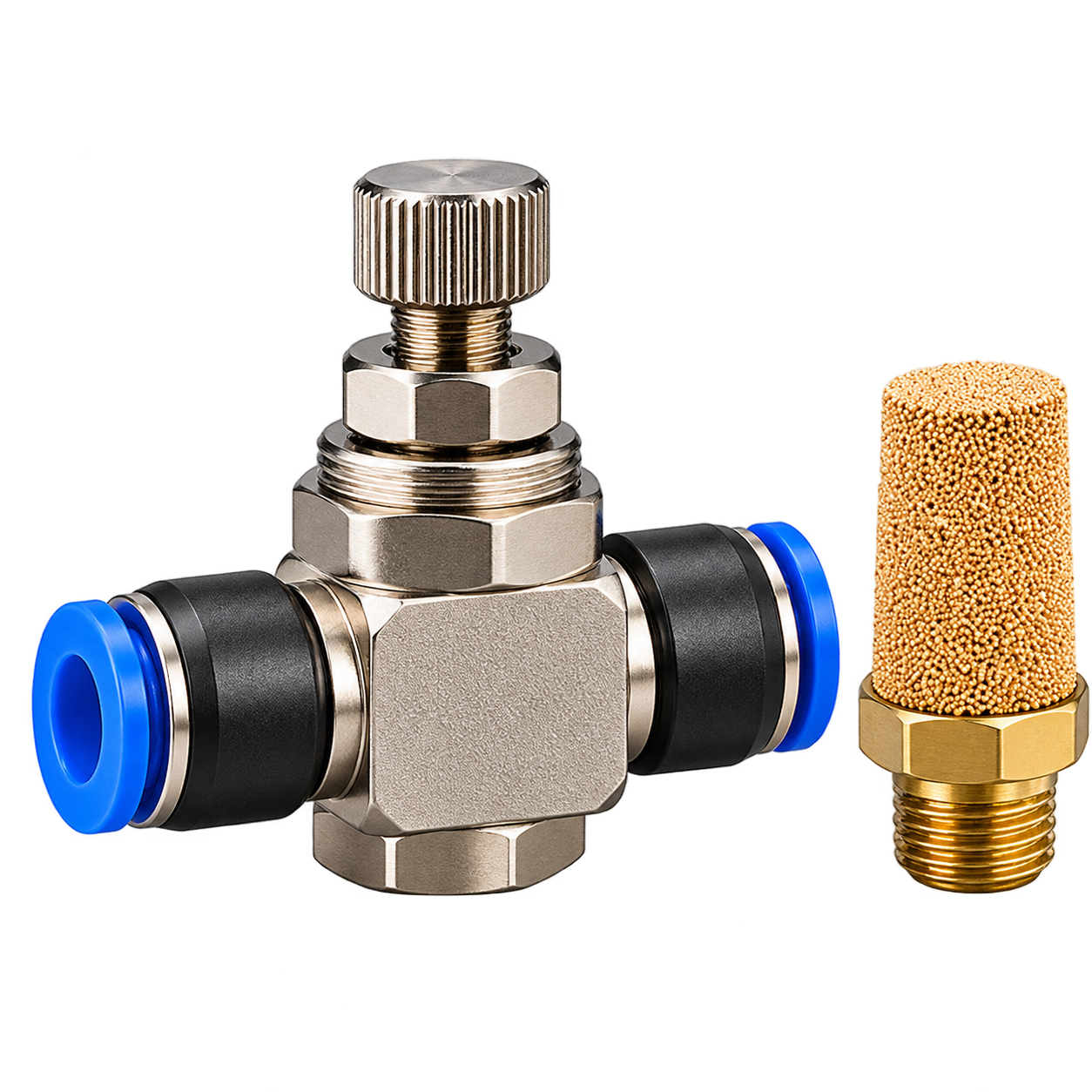
JVP-FC-080 pneumatic flow control and silencer
JVP-FC-080

Flow Control Valve & Silencer

Fine speed control and exhaust-noise reduction for pneumatic circuits.

  • Features: adjustable needle, push-in tube connection and porous exhaust silencer.
  • Benefits: smoother actuator speed, quieter exhaust and improved operator comfort.
View product details →
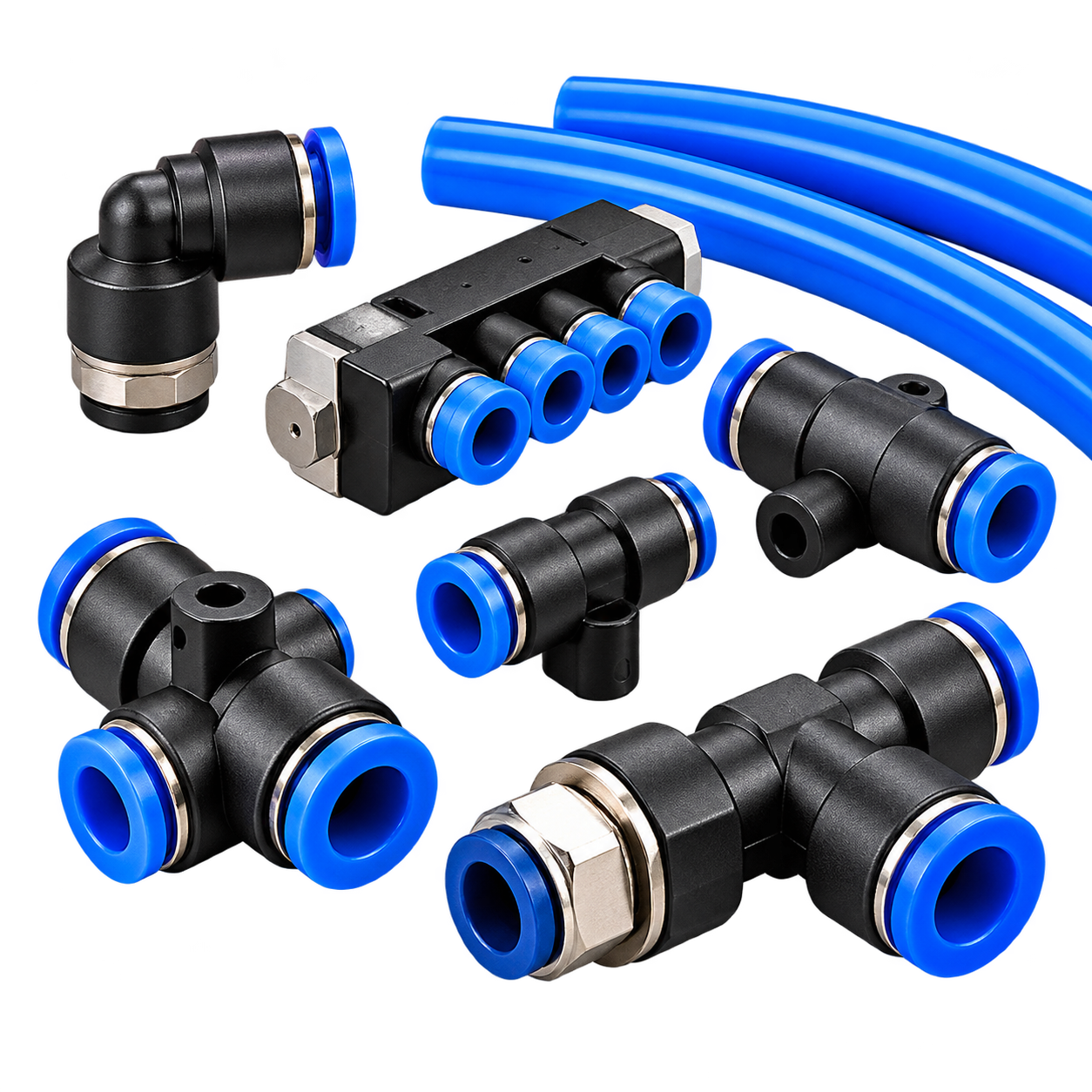
JVP-FIT-12 push fit pneumatic fittings and tubing
JVP-FIT-12

Push-Fit Fittings & Tubing Range

Quick-connect fittings, manifolds and pneumatic tubing for machine plumbing.

  • Features: straight, elbow, tee and manifold options with reusable push-in connections.
  • Benefits: faster installation, easier maintenance, cleaner routing and reduced downtime during modifications.
View product details →

Key Pneumatic Components

FRL & Air Preparation

Filters remove contamination, regulators control downstream pressure and lubricators may be used where a component specifically requires oil-mist lubrication.

Directional Control Valves

Manual, mechanical, pneumatic or solenoid-operated valves route compressed air to actuators. Common configurations include 3/2, 5/2 and 5/3 functions.

Pneumatic Cylinders

Single-acting, double-acting, guided and compact cylinders convert air pressure into linear force and motion.

Rotary Actuators

Quarter-turn and rotary motion for valve automation, indexing and machine mechanisms.

Flow Controls & Silencers

Metering valves influence actuator speed; exhaust silencers reduce discharge noise and can affect backpressure if undersized.

Tubing, Fittings & Manifolds

Correct bore size and routing reduce pressure drop and response delay. Push-in fittings and valve manifolds simplify machine plumbing.

Pneumatic Sizing: Pressure Is Not the Same as Flow

Pressure determines potential force; flow determines how quickly air can fill and exhaust an actuator. A cylinder may have enough theoretical force yet still move slowly if valves, tubing or fittings restrict flow.

ParameterWhy It Matters
Supply pressureSets the pressure available to create actuator force after system losses.
Cylinder boreLarger piston area provides greater theoretical force at the same pressure.
Stroke & cycle rateInfluence air consumption and required flow.
Valve flow capacityAffects fill/exhaust time and actuator speed.
Tubing ID & lengthSmall or long lines can create significant pressure drop and delayed response.

Compressed-Air Quality

Water, oil and particles can shorten valve, seal and instrument life. The required air quality depends on the application and equipment sensitivity.

Contamination Control

  • Particulate filtration for dirt, rust and pipe-scale contamination
  • Water separation and condensate drainage
  • Drying where dew point control is required
  • Oil removal for applications requiring cleaner air
  • Correct filter element maintenance to avoid excessive pressure drop

Point-of-Use Preparation

  • Regulate only to the pressure actually needed
  • Install gauges where operators can verify pressure
  • Use soft-start/dump valves where controlled pressurisation and safe exhaust are required
  • Confirm whether downstream components are designed for lubricated or non-lubricated air

Compressed-Air Efficiency

Leak Management

Air leaks consume compressor capacity continuously. Routine ultrasonic or audible leak surveys can identify avoidable losses.

Pressure Optimisation

Higher pressure increases air consumption and leakage. Regulate branches to the lowest pressure that reliably performs the task.

Pipe & Tubing Sizing

Excessive pressure drop wastes energy and causes unstable machine performance. Main distribution and point-of-use lines should be sized for peak demand.

Pneumatic Maintenance Checklist

Routine Checks

  • Drain condensate and confirm automatic drains operate
  • Check filter differential pressure and element condition
  • Inspect tubing for abrasion, heat damage, kinks and leaks
  • Check cylinder rods, seals, mountings and end cushioning
  • Verify solenoid connectors and manual overrides

Troubleshooting Clues

  • Slow actuator: pressure drop, restricted exhaust, undersized valve/tubing or load increase
  • Jerky movement: poor flow control, contamination, side loading or seal friction
  • Valve sticking: dirty/wet air, incorrect lubrication or electrical issues
  • Pressure instability: regulator sizing, demand spikes or upstream supply limitations
Need to replace or size a pneumatic component?
Provide the manufacturer/model, port size, operating pressure, function, actuator size and cycle requirement where available.
Send an Enquiry →